
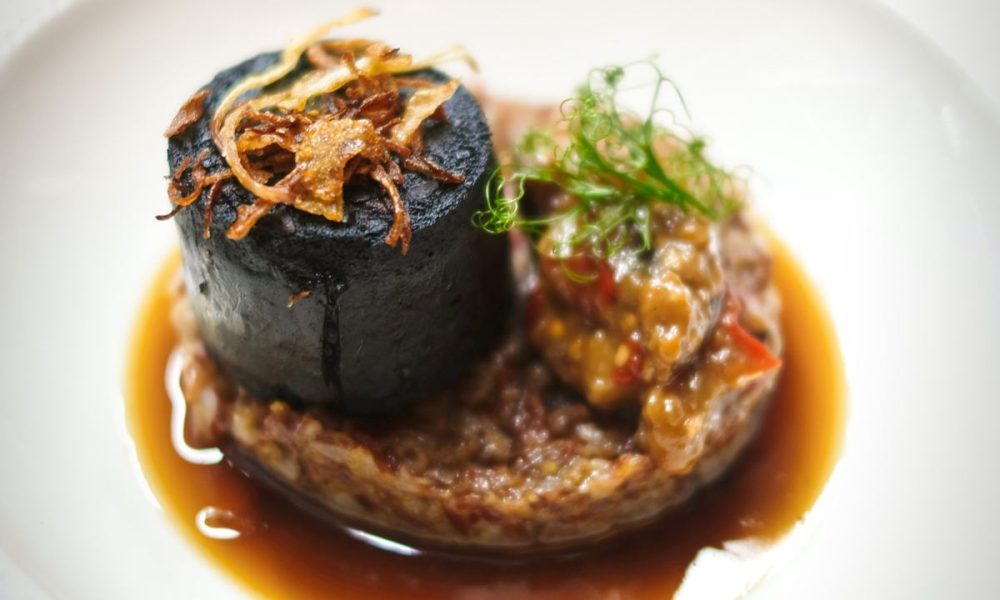
Ask an older Maltese cook about mazzit and you’ll probably get a proverb before you get a recipe: “Fl-aħħar tal-mazzita ssib iż-żbiba”, which means “at the end of the mazzita you find the raisin.” It’s a warning not to expect too much in life, but it also tells you something about the sausage itself. Mazzit is sweet, spiced and studded with fruit, and nothing else in Europe quite tastes like it.
This November the sausage got the recognition its makers had been working towards for years. The European Union registered Mazzit / Mazzita as a Protected Geographical Indication (PGI), so its name now has the same kind of protection as Parma ham or Cornish pasties. At Maldonado we’re celebrating with mazzit on our winter menus, and here’s the story behind it.
Mazzit is a traditional Maltese blood sausage made from fresh pig’s blood or the blood of young bulls. It’s what goes into the blood that sets it apart:
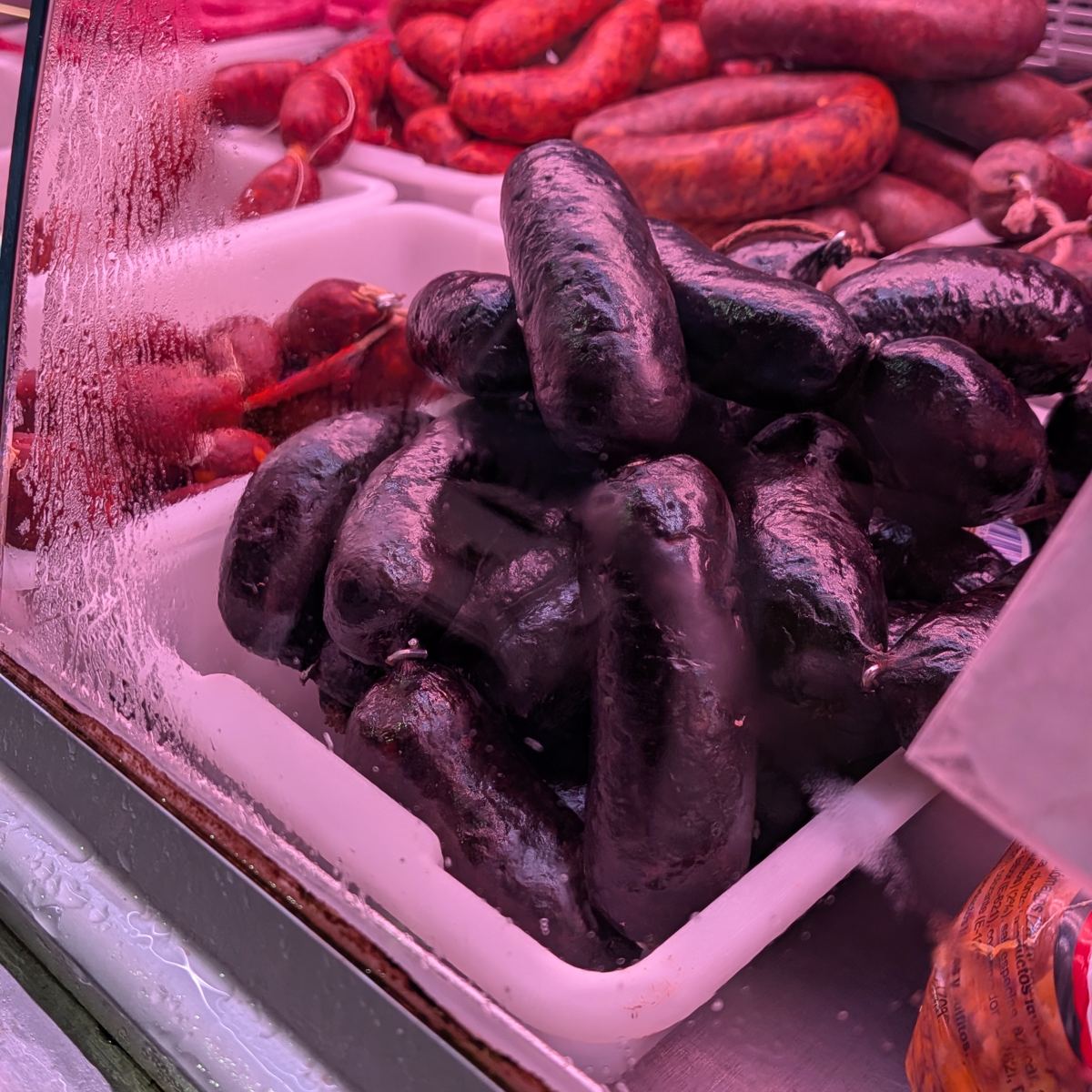 Blood makes up roughly half the mix, and onions and raisins about a quarter each. The result is savoury and sweet at once, and the EU product specification calls that sweetness its most distinctive feature. Each sausage traditionally weighs about one ratal, the old Maltese unit of around 0.8 kg, and is cut into thick slices about one Maltese inch wide.
Mazzit is old. The earliest written mention comes from the Gozitan scholar Gian Francesco Agius De Soldanis in 1750, and Mikiel Anton Vassalli included it in his Maltese dictionary in 1796. Historians think the name may come from the Greek aimatia, a Byzantine blood pudding. If they’re right, mazzit carries a flavour from Malta’s medieval past into today’s kitchens.
Old Maltese cooks didn’t write down exact quantities. Families made it by eye and by memory, using blood bought fresh from the slaughterhouse and onions from local farmers or the Pitkalija market in Valletta. Production was spread across the islands but centred on the south-west of Malta, close to the abattoirs and the onion fields around Siġġiewi.
For generations mazzit was a festive food. Maltese families ate it at weekends and on feast days, and especially to celebrate the end of the Lenten fast from meat. Blood spoils quickly, so mazzit was never made in the heat of summer. It belonged to the cooler months, which is why it feels so natural on a winter table.
Here in Gozo, mazzit was also a poor man’s treat. Older Gozitans remember street vendors selling it near St George’s Square in Victoria. A thick slice was cheap and filling, a little luxury for working families who rarely had meat on the table. That world of busy squares and narrow streets is the Victoria that Gozitan poet and author Ġorġ Pisani (1909–1999) was born into and grew up in, and his writing is full of the everyday life of his hometown.
It also connects to Maltese folklore about the pig, once the most precious animal a household could raise. One old custom was Il-Ħanżira tal-Erwieħ, “the Pig of the Souls”. A few weeks before All Souls’ Day in November, a pig with a bell around its neck was set free in the village. Neighbours who heard the bell came out to feed it, and nobody dared steal an animal that belonged to the dead. On All Souls’ Day the pig was slaughtered and its meat shared with the poor. Nothing was wasted, and blood sausages like mazzit came from that same respect for the whole animal and for sharing food with others.
 The classic way to eat mazzit is simple and hearty: thick slices fried until caramelised, served with potatoes and a fried egg.
A few years ago mazzit was hard to find, even at a Maltese butcher’s. The revival was led by Malta’s Public Abattoir in Marsa, which opened a dedicated mazzit production plant in March 2024, and by a stakeholder group that pushed for EU recognition.
That work paid off this autumn. Under Commission Implementing Regulation (EU) 2026/2529 of 6 November 2026, Mazzit / Mazzita entered the EU register of geographical indications as a PGI. Nobody opposed Malta’s application. From now on, only mazzit made in Malta to the traditional specification can carry the name. It follows ġbejna tan-nagħaġ, the Gozitan-style sheep’s cheese, which became the first Maltese food with EU protection in 2025. For a country that until recently had no protected foods at all, that’s a real milestone for traditional Maltese food.
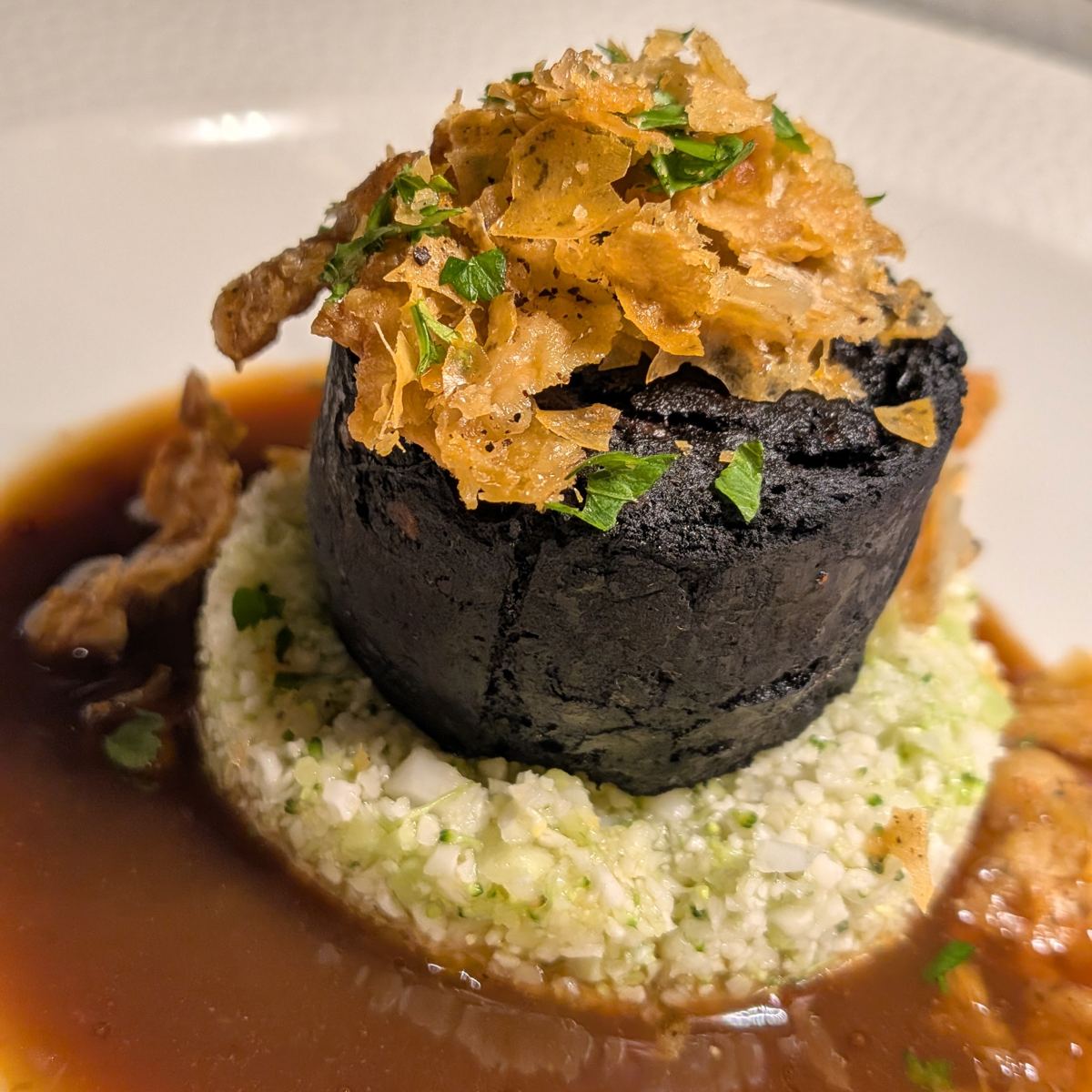 At Maldonado in Victoria, Gozo, mazzit is part of our winter menus, and we’re proud of it. Celebrating Maltese traditions and foods is at the heart of what we do, and few dishes say “Malta in winter” better than this sweet, spiced sausage.
Our chefs treat mazzit with the same respect as the families who made it for centuries. They keep the warmth and sweetness that make it special and add a touch of the modern Mediterranean cooking our guests know us for. Try it alongside a glass from our list of wines of Malta and Gozo, and you’ll taste the islands’ history in one bite.
If you’re looking for traditional Maltese food in Gozo, or for fine dining in Victoria, Gozo, with a menu that takes local heritage seriously, we’d love to welcome you this season.
Book your table online through our website or call us on +356 2701 9270. Mazzit is on the menu for winter only, while the season lasts.