Every September, the carob trees of Gozo give up their harvest. Here is the story of ġulepp (carob syrup), the island’s dark, honeyed syrup, and why we love cooking with it.
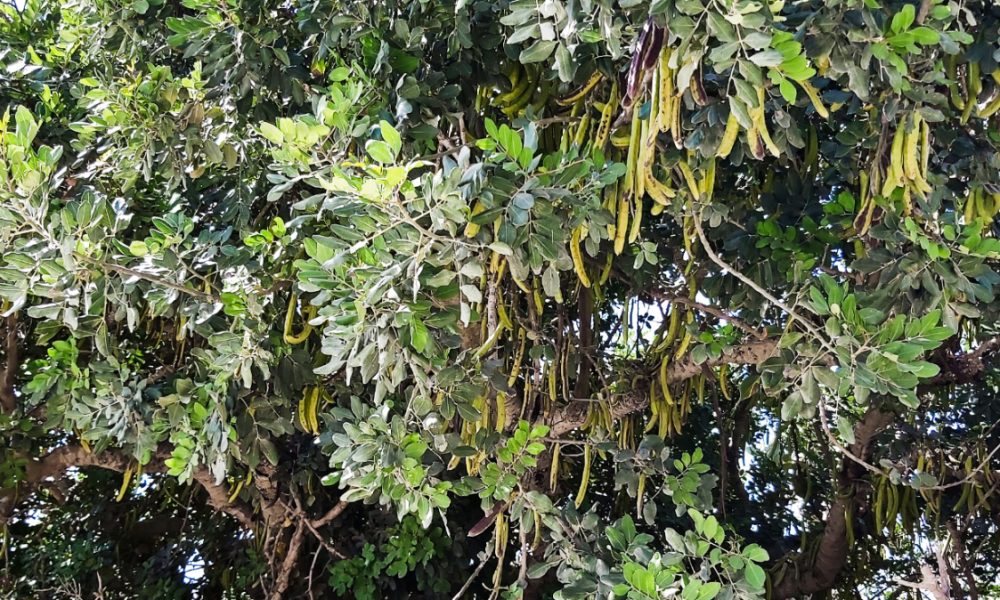
Drive through the Gozitan countryside at the end of summer and you will see them everywhere: broad, evergreen carob trees, their branches hung with long pods that have turned from green to a deep, glossy black. In Maltese the tree is il-ħarrub, and the syrup made from its pods is known simply as ġulepp (carob syrup) – or, more fully, ġulepp tal-ħarrub.
For generations, ġulepp has sat in Maltese kitchen cupboards, less as an ingredient than as a remedy. But it is also one of the most interesting flavours our islands produce, and it deserves a place at the table.
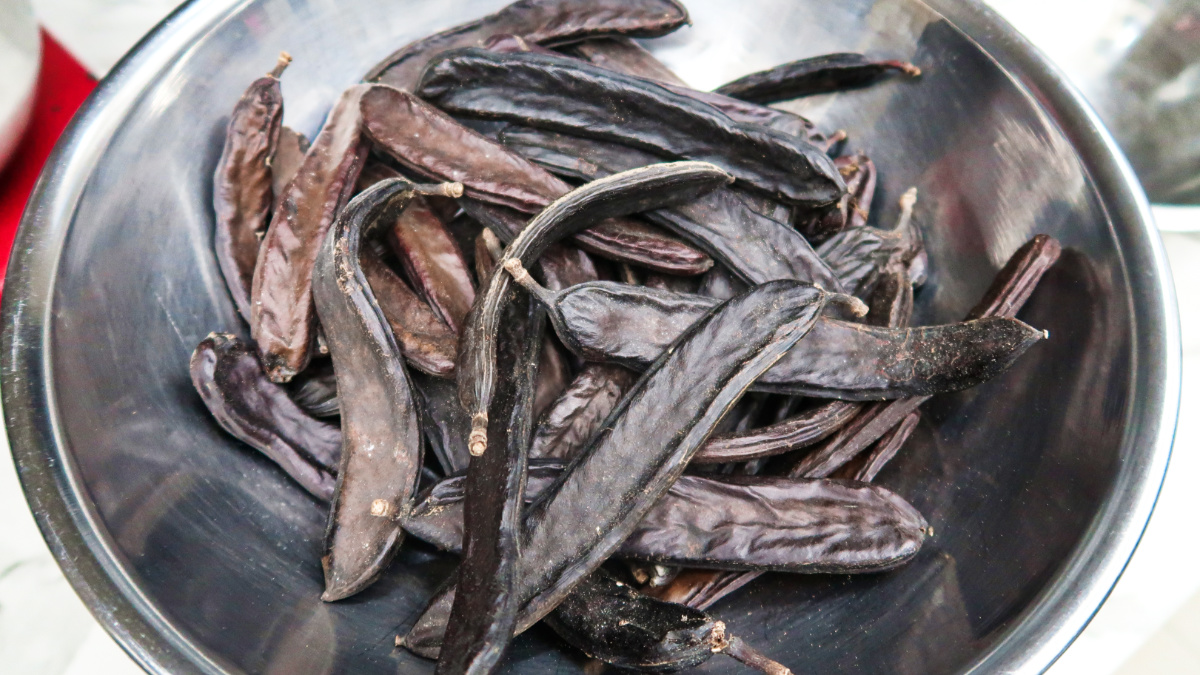
The carob harvest comes in September, once the pods have ripened and darkened on the tree. They are gathered by hand, often knocked from the branches with long sticks, and then the slow work begins.
First the pods are washed to remove the dust of the fields. Next they are toasted, which deepens their natural sweetness and brings out warm notes of caramel, coffee and cocoa. Finally, the toasted pods are broken up and left to infuse in water, releasing their sugars and colour. The liquid is strained and gently reduced until it becomes a thick, glossy, almost black syrup.
The result tastes like nothing else: sweet but earthy, with a hint of bitterness, somewhere between molasses, dates and dark chocolate.
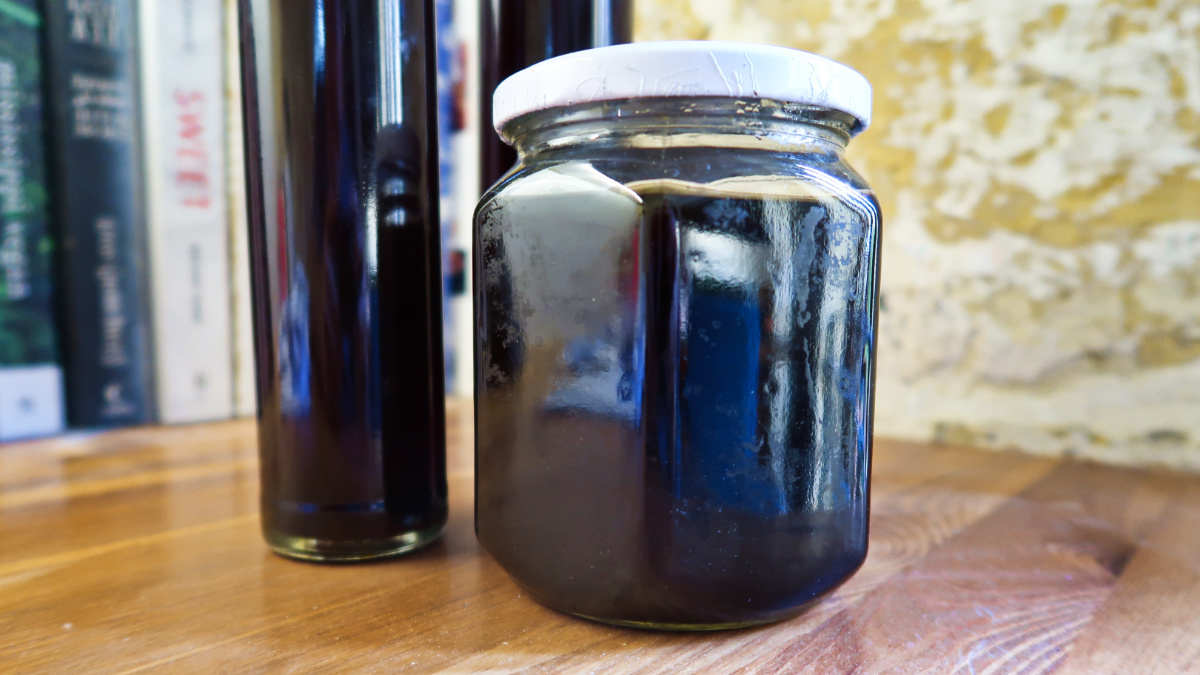
Ask almost any Maltese family about ġulepp and you will hear the same story. At the first scratch of a sore throat, out comes the bottle. A spoonful is stirred into a cup of hot tea, and the thick, sweet syrup coats the throat and soothes it.
Carob has long been valued for its medicinal properties. It is naturally sweet, caffeine-free and rich in fibre and antioxidants, and it has been used in Mediterranean homes for centuries to ease coughs and settle the stomach. Even today, when autumn brings the first chill to the islands, you will find bottles of ġulepp on the shelves of village grocers across Malta and Gozo.
Traditionally, ġulepp is more considered as a remedy than a kitchen ingredient. But chefs are discovering what an interesting ingredient it is. Its sweetness is rounded rather than sugary, and its roasted, slightly bitter depth works beautifully with rich, savoury flavours.
It comes into its own with game and pork. A little carob syrup brushed over pork belly or pork cheeks gives a dark, sticky glaze. Stirred into a sauce for rabbit, duck or venison, it adds a gentle sweetness that balances the richness of the meat, much as a fruit jelly or a splash of port might. It also pairs well with red wine, citrus, rosemary and bay – all flavours that feel right at home in a Gozitan kitchen.
At Maldonado Bistro, we cook with the seasons and with the ingredients that make our islands what they are. So it is only natural that ġulepp has found its way onto our menu.
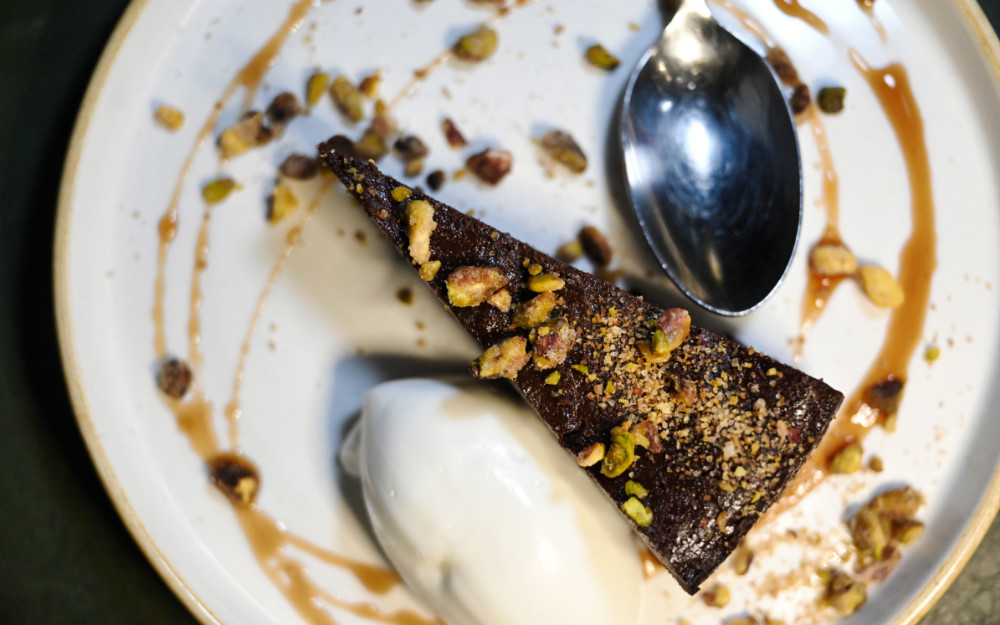
One of our regular dishes is a flourless fudge cake on our dessert menu with chocolate and carob. The name of the dish is ‘Ċikkulata u Ħarub’ which is Maltese for chocolate and carob. The dessert is gluten free and effectively marries chocolate and carob together in a rich and decadent dessert. The carob deepens the chocolate and adds its own warm, toasty sweetness – a small taste of Gozitan tradition to finish your meal.